
Start your ritual today
Discover which DAON products are right for your unique skin profile. Take the diagnostic to receive personalised recommendations tailored to your concerns and goals.
Take the Diagnostic →For decades, skincare has been built on a simple promise: fight aging. Strip, peel, irritate, and repeat. But this aggressive approach comes with a hidden cost — chronic inflammation that actually accelerates the very signs of aging you're trying to prevent.
The beauty industry is undergoing a fundamental shift. We're moving away from punitive skincare and toward Regenerative Longevity — a philosophy that doesn't fight your age, but extends the vitality of your skin at a cellular level. Instead of erasing wrinkles, we're optimizing cellular turnover. Instead of bleaching spots, we're regulating melanin pathways. Instead of stripping oil, we're balancing the lipid barrier.
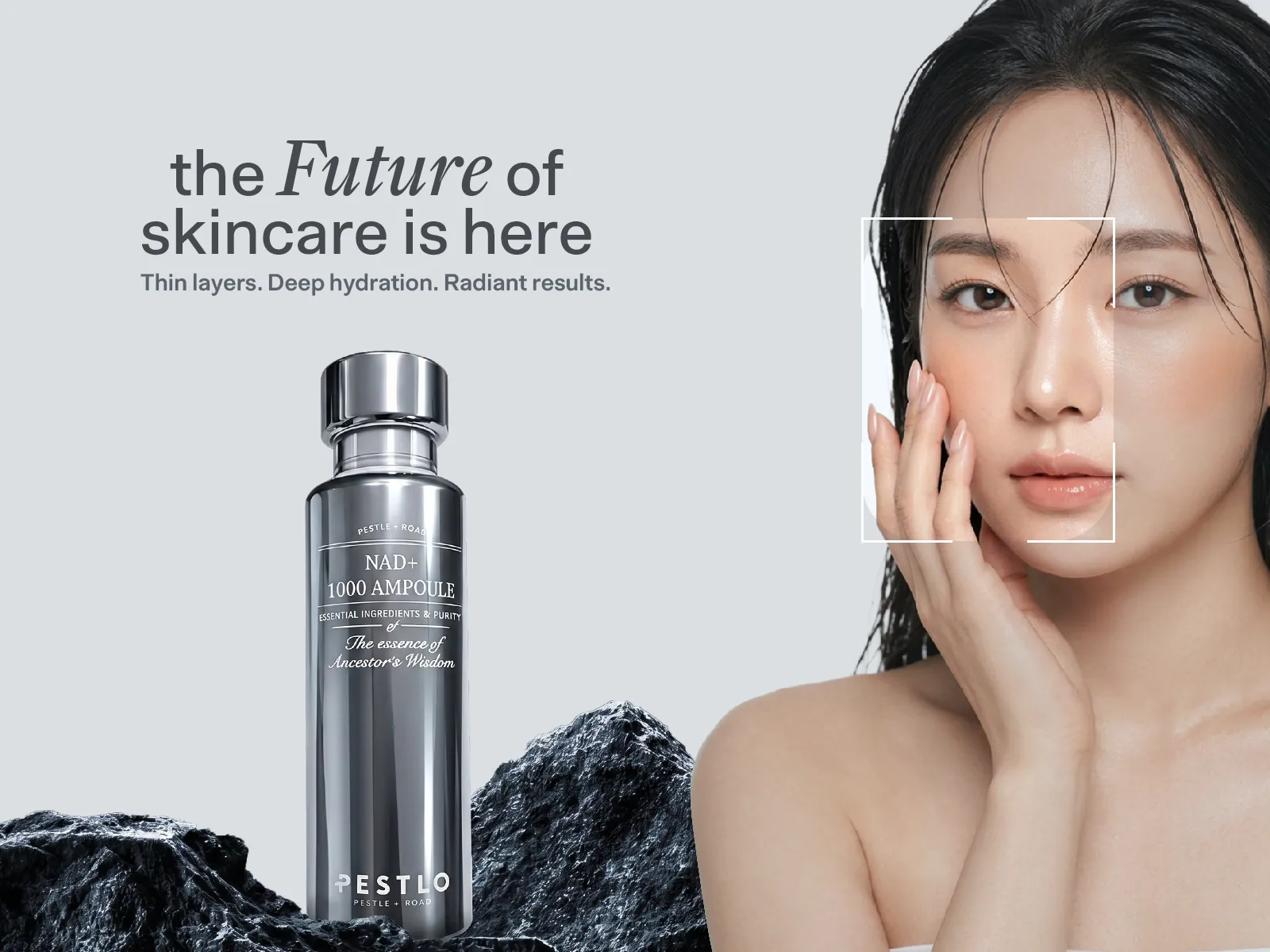
This is the future of skincare. And it's available now.
Understanding the Shift: From Anti-Aging to Longevity
The old paradigm was built on fear and correction. The new paradigm is built on science and prevention.
This shift isn't just marketing speak. It's grounded in evolving science. When you understand how your skin actually works — at the cellular level — you realize that the most effective skincare isn't the harshest. It's the most intelligent.
The Three Pillars of Modern Skincare
1. Regenerative Science: Cellular Energy & Renewal
Your skin's ability to repair itself declines with age. This isn't inevitable — it's biochemical.
NAD+ and Cellular Energy
NAD+ is a coenzyme essential to cellular energy production, DNA repair, and mitochondrial function. Between the ages of 40 and 60, NAD+ levels decline by approximately 50%, directly impairing your skin's capacity for self-repair. When you restore NAD+ levels, you're not patching a surface symptom — you're replacing the cellular machinery that produces collagen, repairs DNA damage, and maintains skin health.
PDRN: The Regenerative Building Block
PDRN (polydeoxyribonucleotide), derived from salmon DNA, engages your skin's natural regeneration pathways to promote collagen synthesis, cellular proliferation, and tissue repair. Unlike ingredients that simply stimulate collagen production, PDRN provides the actual nucleotide building blocks your cells need for DNA synthesis and repair. It's the difference between giving your skin a pep talk and giving it the raw materials it needs to rebuild itself.
Type III Collagen: The Youth Factor
Young skin is composed of approximately 80% Type I collagen and 15% Type III collagen. Type III collagen — sometimes called "baby collagen" — is why a child's skin feels impossibly soft, supple, and quick to repair. As we age, Type III collagen production declines, and skin loses its characteristic bounce and plumpness. Recombinant Type III collagen restores this youthful architecture, literally rebuilding the structural foundation of your skin.
2. Barrier-Safe Potency: Results Without Inflammation
For years, the beauty industry sold us a lie: that skincare had to sting to work. The reality is the opposite. Chronic inflammation from harsh retinoids and over-exfoliation accelerates aging, not prevents it.
The Lipid Barrier: Your Skin's First Line of Defense
Your skin's barrier function depends on a precisely organized lipid matrix composed of ceramides (50%), cholesterol (25%), and free fatty acids (25%). When this barrier is compromised — whether by over-exfoliation, harsh surfactants, or retinoid irritation — a cascade begins: increased water loss leads to dehydration, which triggers inflammation, which accelerates collagen degradation. This is the "inflammation-aging loop" that modern skincare seeks to break.
Bakuchiol: Retinol's Gentler Equal
A landmark clinical trial published in the British Journal of Dermatology demonstrated that bakuchiol is comparable to retinol in its ability to improve photoaging — reducing wrinkles, improving pigmentation, and enhancing overall photodamage scores — while being significantly better tolerated. Bakuchiol stimulates Type I and Type III collagen production without binding to retinoic acid receptors, delivering retinol-like results without the characteristic irritation.
The Principle: Potency Through Protection
Winning formulations deliver actives within a lipid-compatible matrix that reinforces rather than disrupts the stratum corneum. This requires barrier-supportive vehicles, multi-ceramide complexes, postbiotic ingredients that maintain the skin's microbiome, and gentle exfoliation modalities like PHAs that promote turnover without compromising barrier integrity.
3. Structural Restoration: Firming, Density & Elasticity
Beyond cellular renewal and barrier health, modern skincare addresses structural integrity. Your skin needs to feel firm, dense, and resilient — not just look smooth.
Volume and Plumping
Actives like Volufiline stimulate adipogenesis in the dermis, increasing skin volume and plumpness. This addresses the loss of structural support that occurs naturally with age, restoring the fullness and contour that define youthful skin.
Body Skin Density
The philosophy of regenerative longevity extends beyond the face. Body skin experiences the same aging processes and deserves the same intelligent care. PPC (phosphatidylcholine), used in clinical mesotherapy, inhibits cellulite formation and blocks fat storage, while low-molecular-weight collagen directly improves skin firmness and tone.
The Hyperpigmentation & Tone Correction Segment
Melasma, post-inflammatory hyperpigmentation, and stubborn dark spots are frustrating. The old approach relied on harsh bleaching agents that damaged the barrier. The modern approach uses multi-pathway ingredients to regulate melanin production safely and effectively.
Multi-Pathway Melanin Blocking
Niacinamide (Vitamin B3) strengthens the barrier while inhibiting melanosome transfer and reducing inflammation. Tranexamic Acid (TXA) blocks the plasmin-mediated pathways that trigger melanin production. Together, they address hyperpigmentation at multiple biological levels without irritation.
The 5-Step Ritual: A Framework for Regeneration
DAON's proprietary 5-step method — Cleanse, Hydrate, Treat, Seal, and Protect — is not merely a routine structure. It's a carefully sequenced protocol designed to optimise your skin's biology at every stage.
1. Cleanse
Remove oxidative debris and environmental pollutants without disrupting the lipid barrier — preserving the microbiome, maintaining acid-mantle integrity, and preparing a non-inflamed canvas for actives.
2. Hydrate
Restore transepidermal water content and open cellular absorption pathways. Hydrated cells metabolise more efficiently; water is the medium for all enzymatic repair processes.
3. Treat
Deliver targeted regenerative actives — NMN, PDRN, Bakuchiol, Niacinamide, Type III Collagen — to specific cellular pathways, addressing the root biological cause, not the surface symptom.
4. Seal
Lock actives into the skin matrix with lipid-compatible occlusion; replenish ceramides and structural lipids to extend active contact time and reinforce barrier architecture.
5. Protect
Shield regenerating skin from UV, blue light, pollution, and oxidative stress — preventing the environmental damage that would undo regenerative gains. Sun protection as longevity insurance.
This framework ensures potent regenerative actives are always delivered onto a properly prepared, hydrated canvas and then protected from degradation. It's the difference between planting seeds in fertile, watered soil versus scattering them on concrete.
The Science-Backed Difference
The global skincare market is projected to surpass $129 billion in 2026, but not all growth is equal. Brands that understand the shift from reactive symptom treatment to proactive biological optimization are defining the future.
DAON occupies a distinctive position: clinical-grade regenerative actives — NMN, NAD+, PDRN, Type III Collagen, Bakuchiol — delivered in barrier-safe, non-irritating vehicles. This is the "sweet spot" modern consumers are actively seeking: potency without punishment, science without inaccessibility.
The future of skincare isn't about fighting your age. It's about extending the functional lifespan of your skin at a cellular level.
The question isn't whether you should upgrade your skincare. It's whether you can afford not to.